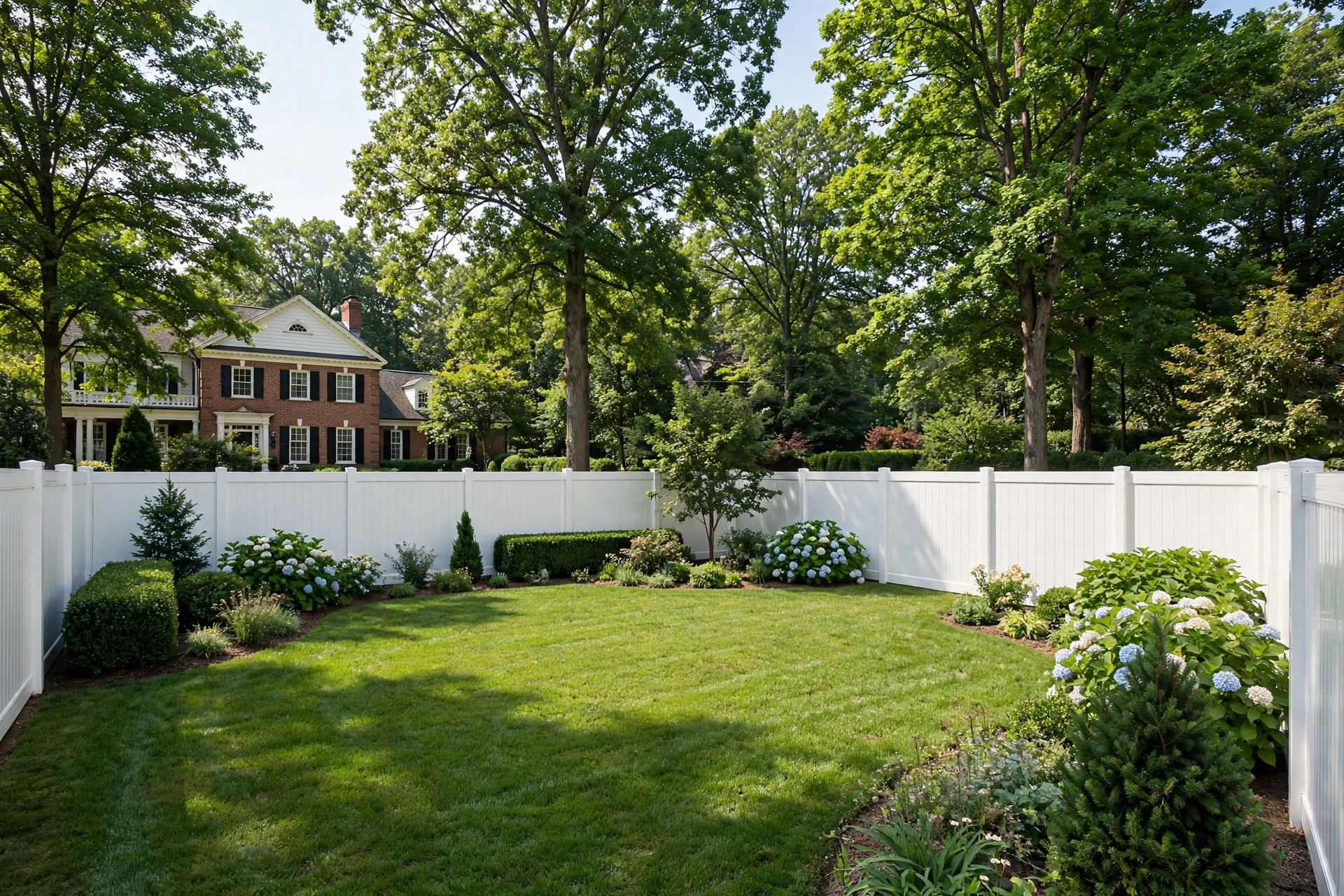
Fence installation for Bowie homes: wood and vinyl privacy fences, aluminum and picket fences, gates, and pool fencing, with published price ranges up front and a written figure before any work begins.
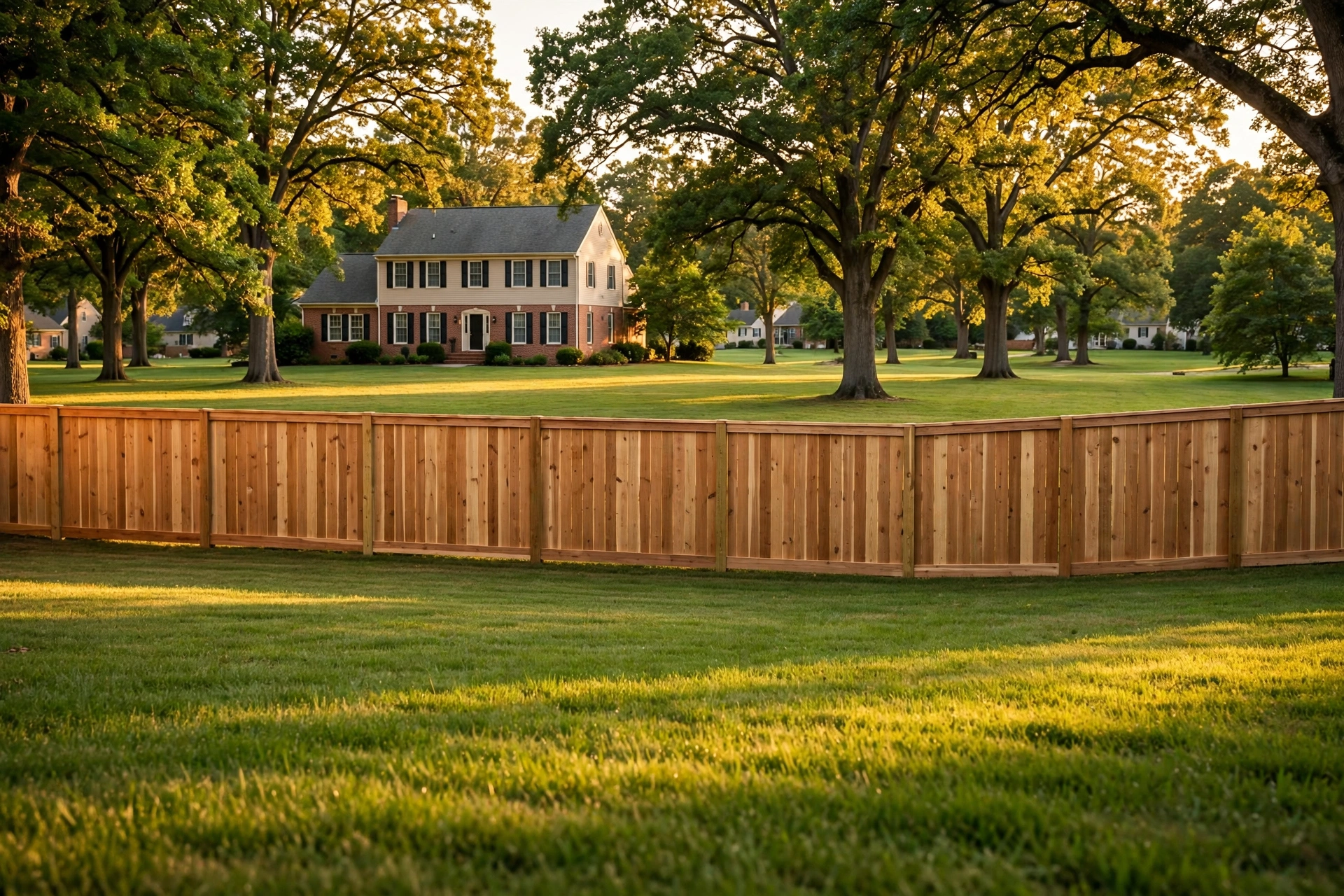
New wood privacy fence around a Bowie, MD yard by Bowie Fence Company
We install wood, vinyl, aluminum, and chain link fences for homeowners and businesses in Bowie, MD, and we build each fence around the lot, the household, and the rules that apply to that street. Bowie yards are large by Maryland suburb standards, which shapes post counts, gate swing, and layout on ground that is rarely flat.
Much of our work starts in Belair, where many Levitt era properties were never fenced at all, so owners often close a full perimeter for the first time. Dogs drive most of those decisions. Others call because a pool is going in and pool barrier rules require a fence that closes and latches on its own. With 58,383 residents and 83.9 percent homeownership, these are long term choices, and Woodmore, Fairwood, and Mitchellville add HOA rules on style, height, and which side faces out.
BEFOREAFTER
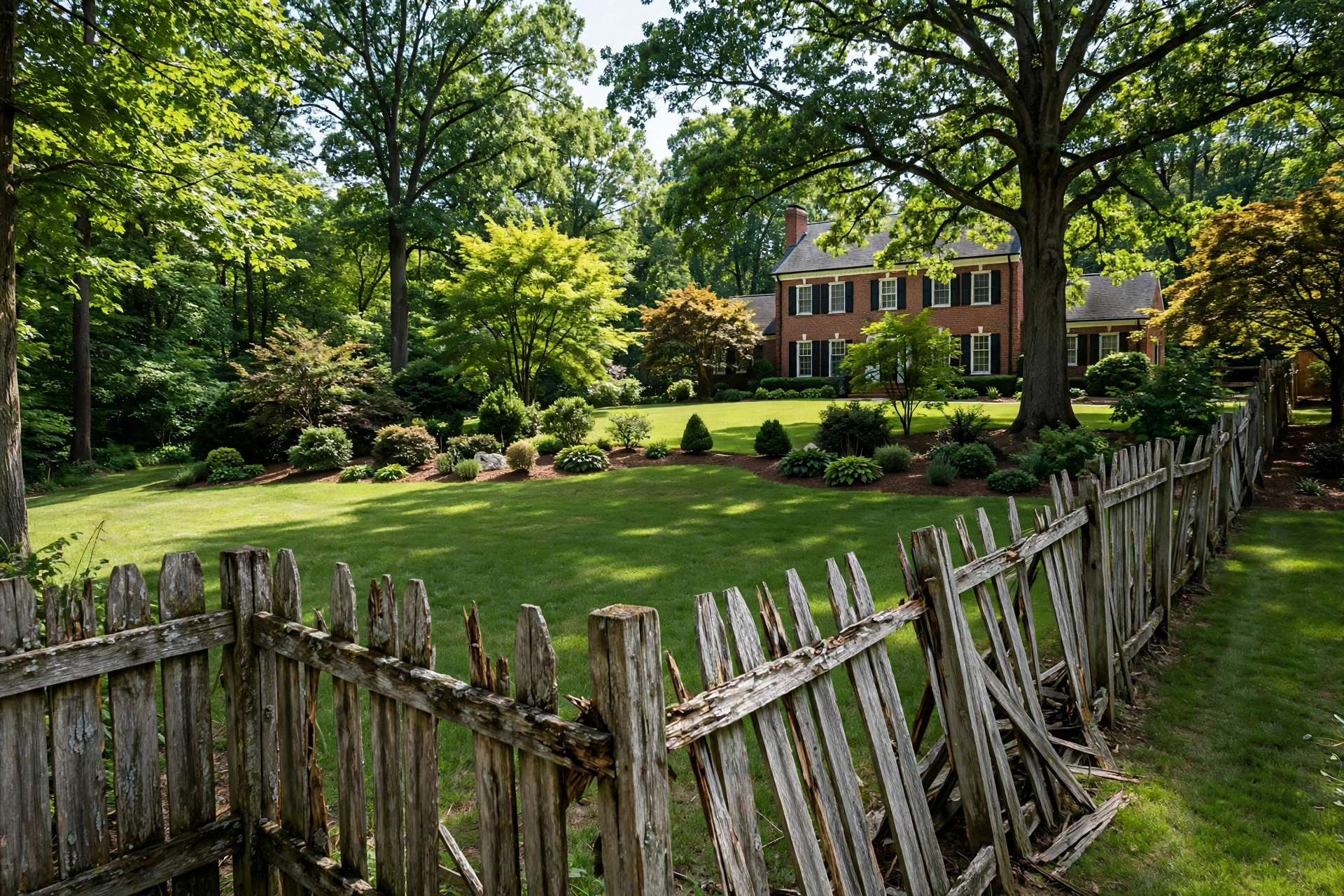
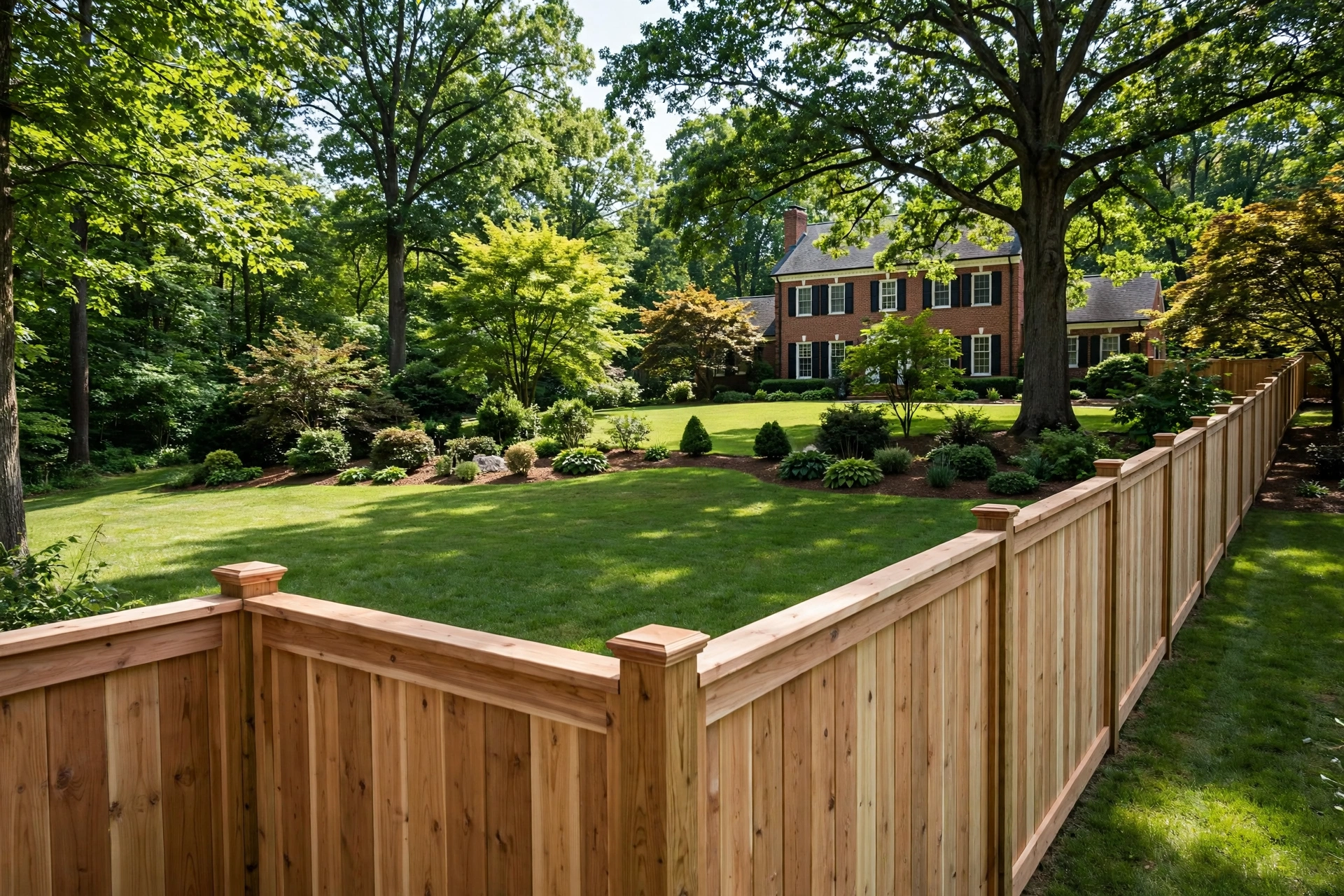
An open Belair back yard with no fence on any side needed a full wood privacy perimeter and two gates, one wide for mower access. The back line ran through mature tree roots, so post spots shifted to clear the largest roots without leaving the boundary.
Turnaround
Four days on site from layout to gates and final walkthrough.
Final Price
$4,380
BEFOREAFTER
A Woodmore property needed vinyl privacy on the back and both sides, built to the style and height rules the HOA sets for that street. One side line sat near a neighbor fence placed inside the boundary, so the new line was laid out from survey marks before digging.
Turnaround
Five days on site, including layout verification before posts were set.
Final Price
$5,240
BEFOREAFTER
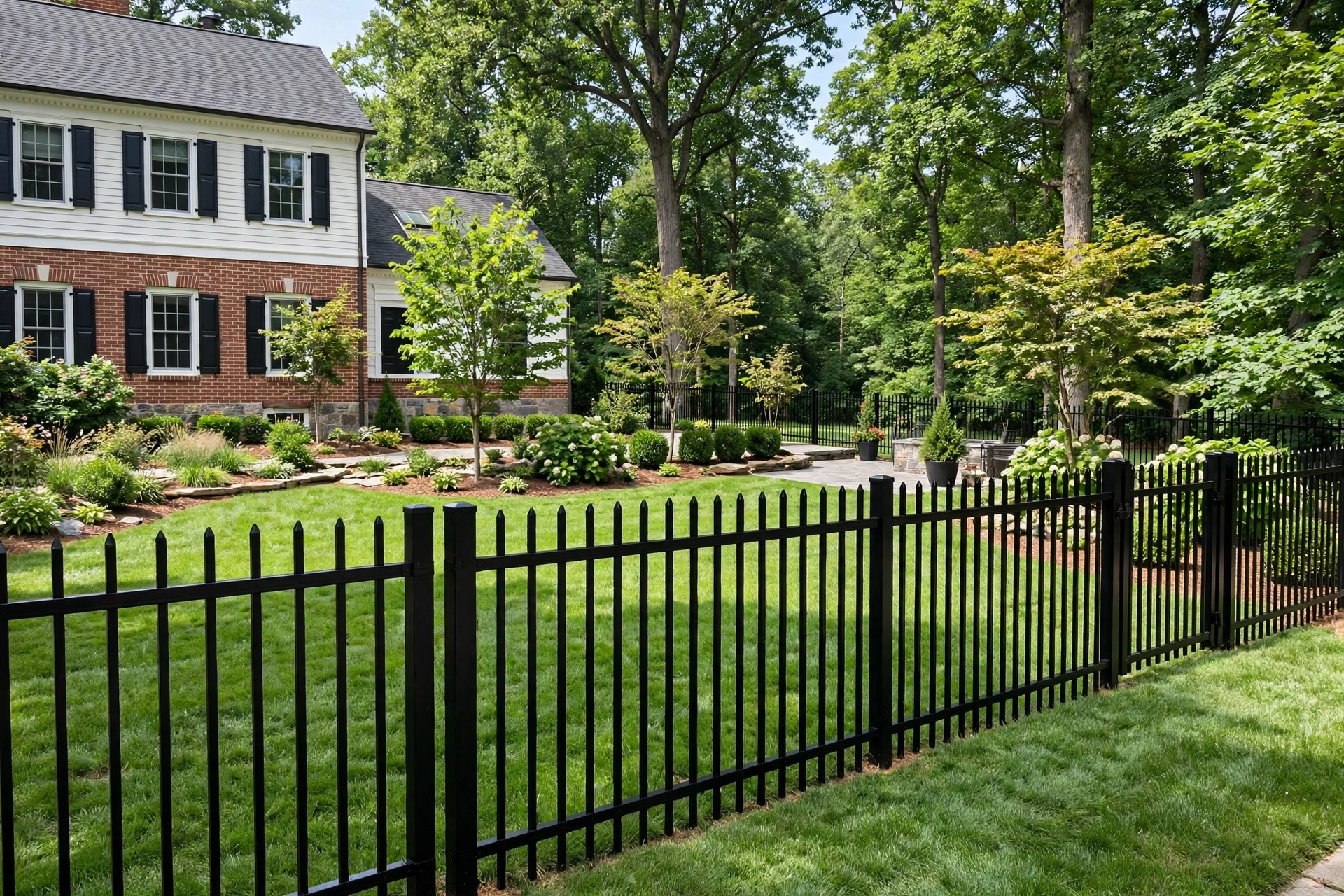
A Fairwood home with a pool under construction needed aluminum fencing that met pool barrier rules and kept sight lines open. The layout wrapped the pool, tied into the house, and placed self closing gates at both entries, with rackable panels following the grade without gaps below.
Turnaround
Three days on site from layout to latch testing at both gates.
Final Price
$4,160
Residential Fence Installation in Bowie, MD
Most residential calls here begin with one plain problem. A dog found the gap in a hedge. Kids need a yard that is actually enclosed. A corner lot feels exposed on two streets.
Wood privacy remains the workhorse in Belair and the older sections. Cedar and pressure treated pine both serve well; the choice comes down to how an owner wants the fence to age. Boards sit tight at install, then shrink slightly as they dry, and long lines need careful stepping where ground rolls toward a rear swale.
Vinyl privacy suits owners who want a uniform look and little seasonal upkeep. Panels read the same from every angle, which matters where an HOA reviews the fence face as closely as the height. Posts still carry the structure, and a post set out of line shows in every panel after it.
Aluminum is the pick for pools and front facing runs where an open look matters. Narrow pickets keep a yard visible and meet pool barrier rules when height and gate hardware are correct. Rackable sections follow slopes cleanly, and on corner lots aluminum keeps street sight lines open where a solid fence could block views.
Picket fences belong to front yards and the older streets near Old Town Bowie, where a low fence frames a house instead of hiding it. Spacing, top style, and gate placement carry the look. Some neighborhoods cap front height well below back yard height, so confirm any limit before choosing a design a review board may send back.
Shadowbox construction alternates boards on both sides of the rails, so the fence looks finished from yard and street alike. That symmetry helps on shared lines, where each neighbor sees a similar face. Air moves through the small gaps, and privacy stays strong at normal angles.
Board on board layers one row of boards over the gaps in the row behind it. It is the most private wood option we build, with no sight line through even after lumber dries. Extra boards mean extra weight, so posts, rails, and footing depth must match the load on long rear runs in South Bowie.
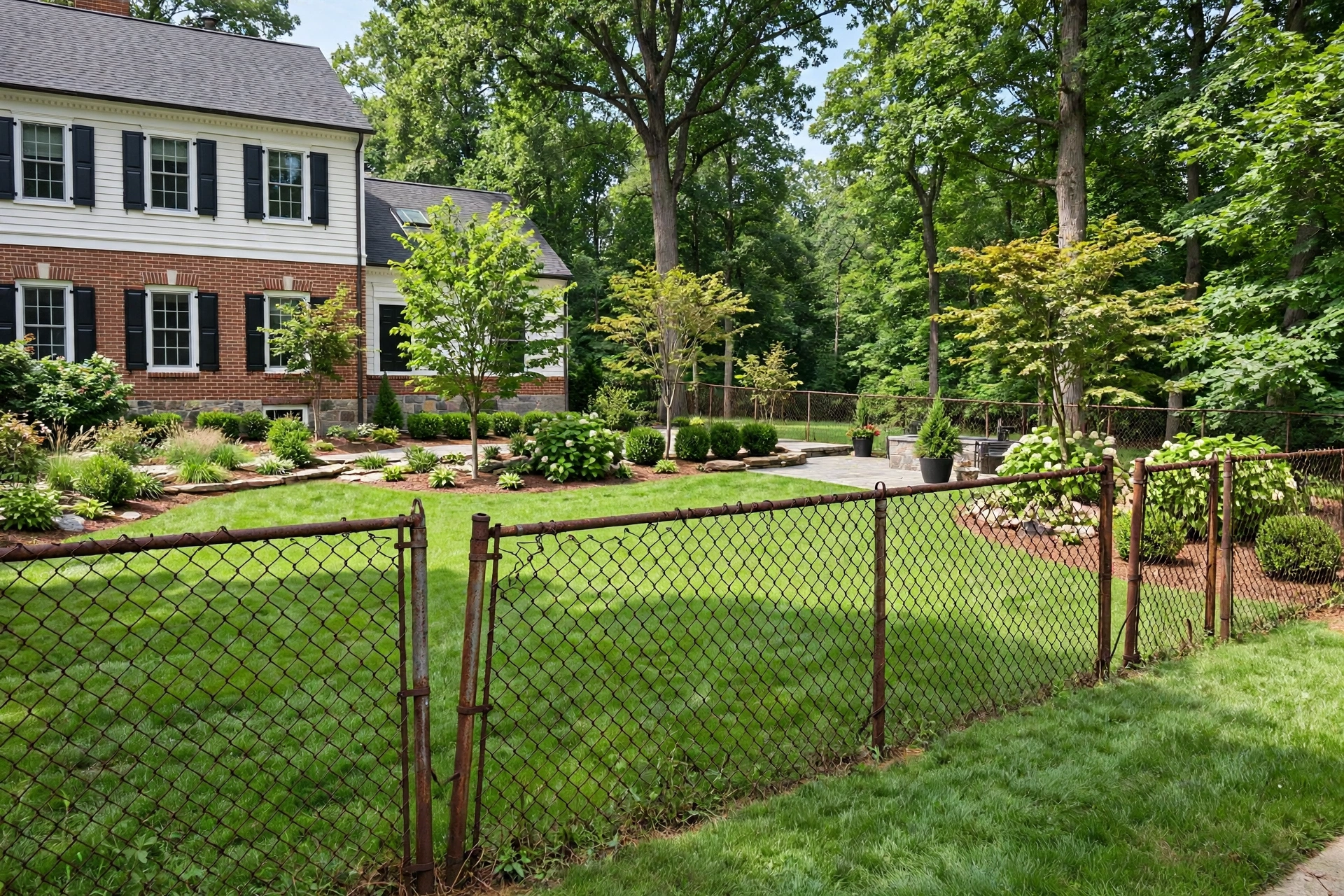
Chain link still earns its place in Bowie. Dog runs, side enclosures, garden protection, and budget conscious full perimeters all fit it well. Galvanized mesh with a top rail blocks neither light nor air, and black coated mesh reads quieter against trees. Height and gauge decide how it feels when a large dog hits it at speed.
Replacement starts with a judgment call about what can stay. Sound posts in the right places sometimes carry a new fence. Leaning posts, rotted rails, and a line that never matched the boundary argue for starting over. Bowie has many shared lines where neighbors replaced at different times, so the halves rarely match.
Commercial Fence Installation in Bowie, MD
Commercial work follows different pressures than a back yard. Access must be controlled without slowing staff down, deliveries need gates that latch every time, and a damaged section can be a safety issue the same day.
Retail pads, offices, and service yards use fencing to mark where the public stops and operations begin. Layout comes first, because a fence that ignores truck turning space or dumpster access creates daily friction for years. Steel and aluminum suit front runs; chain link with screening suits rear lines, where budgets cover long distances.
Commercial Chain Link Fencing
Chain link is the default for storage yards and utility enclosures across Prince George's County. Taller heights and heavier posts are chosen by site need, not habit. Gates carry the wear, and a wide double gate on tired hinges will sag and fail to latch, so frame strength and footings get extra attention where trucks pass daily.
Commercial Gates and Access Runs
A commercial gate is a moving structure, not a panel with hinges. Swing room, wind load, and daily cycle count shape what should be built. Manual gates suit low traffic yards; higher traffic sites need wider openings and heavier frames. Planning around the largest vehicle that truly uses the gate keeps operation simple.
On larger parcels toward Collington, fencing keeps animals in and defines working ground. Split rail reads right there and handles long runs well, and wire backed split rail adds containment for dogs and smaller livestock. Long runs cross wet low spots and tree lines, and post placement has to respect both.
Recent fence installation Projects in Bowie, MD
Each card below shows one completed scope in format only: project type, neighborhood, month and year, and final amount.
Wood Privacy Fence Installation in Belair, October 2026, $4,400
A full back yard perimeter in wood privacy was completed in Belair in October 2026 for $4,400. The scope covered both side lines, a back line set clear of mature roots, and one wide gate. No prior fence stood on the property, so layout from boundary marks came before digging.
Vinyl Privacy Fence Installation in Woodmore, September 2026, $5,190
A vinyl privacy replacement was completed in Woodmore in September 2026 for $5,190. Old sections came out, new posts were set on the verified line, and height and style matched the HOA rules for that street. A single gate near the patio handles daily use.
Aluminum Pool Fence Installation in Fairwood, August 2026, $5,025
An aluminum pool enclosure was completed in Fairwood in August 2026 for $5,025. The layout enclosed the pool on three sides, tied into the house wall, and used self closing, self latching gates at both entries. Panels racked down the side slope without gaps below.
Chain Link Fence Installation in Chapel Forge, July 2026, $3,930
A chain link back yard enclosure was completed in Chapel Forge in July 2026 for $3,930. The scope enclosed the rear yard for dogs, with a gate on each side so neighbor access and mower access stayed open. Black coated mesh was used along the tree line.
Board on Board Fence Installation in Mitchellville, June 2026, $4,885
A board on board privacy fence was completed in Mitchellville in June 2026 for $4,885. The new fence replaced a shorter, worn run between two back yards that sit close together. Overlapped boards closed sight lines fully, and heavier posts carried the added weight.
Shadowbox Fence Installation in Tulip Grove, May 2026, $4,175
A shadowbox fence was completed in Tulip Grove in May 2026 for $4,175. The shared side line was the focus, since both households see that run daily and both wanted a finished face. Alternating boards gave each side the same appearance, and one gate closed the run at the house.
Why Bowie Fence Company Is the Best Fence Installation in Bowie, MD
A fence that still looks right after two wet winters and a large dog testing every gate comes from process, materials, and honest scheduling.
Our Process
Every project starts with the quote form at the bottom of this page. You name the service, the material you are leaning toward, and a note about your lot. A site visit follows, where we measure runs, check grade and drainage, test gate swing, and review your property line information. A survey, when one exists, settles line questions best; where none exists, we say plainly what is known and what is not.
After the visit, the scope is written in plain language: material, height, gates, tear out if any, and how the line handles trees and corners. HOA review, where required, sits in the schedule before materials are ordered. In Prince George's County, fences are largely permit light, with rules that vary by height, corner lots, and HOA. That is a market fact, not a promise about any one lot.
On build days, posts go in first and get checked for line and plumb before boards or panels follow. Gates are hung last, so swing and latch alignment reflect the finished fence, and the job ends with a walkthrough opening every gate.
Materials We Use
Material choice decides how a Bowie fence ages. Pressure treated pine offers value and strength; cedar brings natural resistance and lighter weight that gates appreciate. Posts are the backbone either way. Shallow posts move in wet clay soil, and no board quality hides that for long, so post size and footing depth match the fence being built.
Vinyl sections are picked for wall thickness and reinforcement where panels face open wind. Aluminum panels are chosen for coating quality and rackable designs on slopes. Chain link mesh matches the job, lighter for a garden run and heavier where a large dog will test it. Gate hardware is rated for the width and weight it will actually carry.
Timeline and What to Expect
Most single family Bowie fences take two to five days on site once materials are ready and HOA review is complete. A first time full perimeter on a large Belair lot sits at the longer end; a single side line can finish faster. Weather moves schedules most, since posts set into soaked clay will not hold line like posts set into firm ground.
Expect layout marks before digging, pet and access plans for build days, and noise during post hole work. Utility marking must happen before digging, and that lead time belongs in any honest schedule. Root heavy lines and tear out add time, flagged early, and no project counts as finished while a gate drags.
Fence Installation Cost in Bowie, MD
No Bowie company publishes a local price list. The figures below are published guide ranges, labeled as published figures, and they frame planning before a site visit sets the real number for a specific lot.
Wood Fence Costs in Published Guides
Published guides place wood fence installation at $1,974 to $4,551, with an average of about $3,105. A short side line can land near the lower part of that range. A long first time perimeter in board on board, with two gates and root work, can move above it, and taller fences cost more in material and posts.
Vinyl Fence Costs in Published Guides
Published guides commonly place vinyl fencing at $3,500 to $4,850. Vinyl costs more upfront than basic wood, and the total reflects style, height, and gate count. Owners should weigh upkeep alongside install price, since a fence that needs no staining changes the long term math.
Typical Fence Project Ranges
Published guides place typical fence projects at $3,000 to $5,500 overall. That band covers many standard Bowie back yard jobs in wood and chain link. Aluminum pool enclosures, long vinyl perimeters, and difficult access builds can sit above it; dog enclosures and partial replacements can sit below. It is a planning start, not a promise.
What Moves a Fence Price in Bowie
Lot size moves Bowie prices first, because large lots contain more fence. Material runs second, then gates, since each gate adds framing, hardware, and labor beyond a straight run. Tear out adds time, and slopes, roots, and tight access slow production. A site visit turns a published range into a decidable number.
Bowie Fence Company Serves Bowie and Surrounding Areas
We are based in Bowie and serve surrounding communities across Prince George's County and Anne Arundel County. In Prince George's County, that area includes College Park, Laurel, South Laurel, Greenbelt, Beltsville, Glenn Dale, Kettering, Largo, Lanham, and Mitchellville. In Anne Arundel County, we serve Glen Burnie, Severn, Odenton, Annapolis, Severna Park, Pasadena, Crofton, Arnold, Edgewater, and the off post community around Fort Meade.
Distance shapes scheduling, not quality. A job in Crofton or Glenn Dale gets the same layout care and gate walkthrough as one near our base, so owners outside Bowie should name their town in the quote form below.
How much does fence installation cost in Bowie, MD?
Published guides place wood fence installation at $1,974 to $4,551, with an average of about $3,105, vinyl fencing commonly at $3,500 to $4,850, and typical fence projects at $3,000 to $5,500 overall. Your figure depends on linear distance, material, height, gate count, tear out, and ground conditions. A site visit turns those published ranges into a specific quote for your property.
Do fences in Bowie need a permit?
In Prince George's County, fences are largely permit light, with rules that vary by height, corner lot position, and site conditions, and Anne Arundel County applies its own rules. HOA approval is separate in Woodmore, Fairwood, and Mitchellville, and often controls style and height more directly. Share your neighborhood and planned height in the quote form to sort out which rules apply.
How do I know where my property line is?
A survey is the most reliable record of a boundary, and many Bowie owners find a plat or survey among their closing papers. Iron pins sometimes remain at corners, though they can be buried or disturbed. We lay out fences from the best information available and say clearly when a line is uncertain, since building on a guessed line risks moving a finished fence.
Which fence is best for dogs?
The right dog fence depends on the dog. Height stops jumpers, tight spacing stops dogs that push or squeeze, and a bottom edge close to grade discourages digging. Chain link suits many active dogs and large areas. Wood and vinyl privacy suit dogs that react to passersby, since a solid fence removes the visual trigger.
What fence works around a pool?
Pool fences in Maryland must act as barriers, with height, spacing, and self closing, self latching gates all part of how the barrier performs. Aluminum is the most common Bowie choice because it meets barrier needs while keeping the pool visible from the house. Vinyl privacy appears where privacy matters more than visibility, and gate placement deserves care either way.
How long does a fence installation take?
Most single family installations take two to five days on site once materials are ready and any HOA review is done. Tear out, long perimeters, root heavy lines, and wet weather can add time, while a single side line or dog run often finishes faster. After a site visit, your schedule can be stated in days rather than guesses.
Get Your Fence Quote
Tell us about the fence you need. We read every request that comes in and respond with the published range for that kind of work and the next step, starting with a visit to walk the lines and measure the layout.
Prefer to talk it through first? Send the form and we will call you back at the number you give us.